
Why choosing flexible tools today saves you money, control, and leverage tomorrow
Most software decisions feel permanent until the invoice goes up, the features stall, or the exit door quietly disappears. Open formats are not exciting. They are not flashy. They are the digital equivalent of keeping your house keys instead of handing them to a landlord who might change the locks.
What “open formats” actually mean
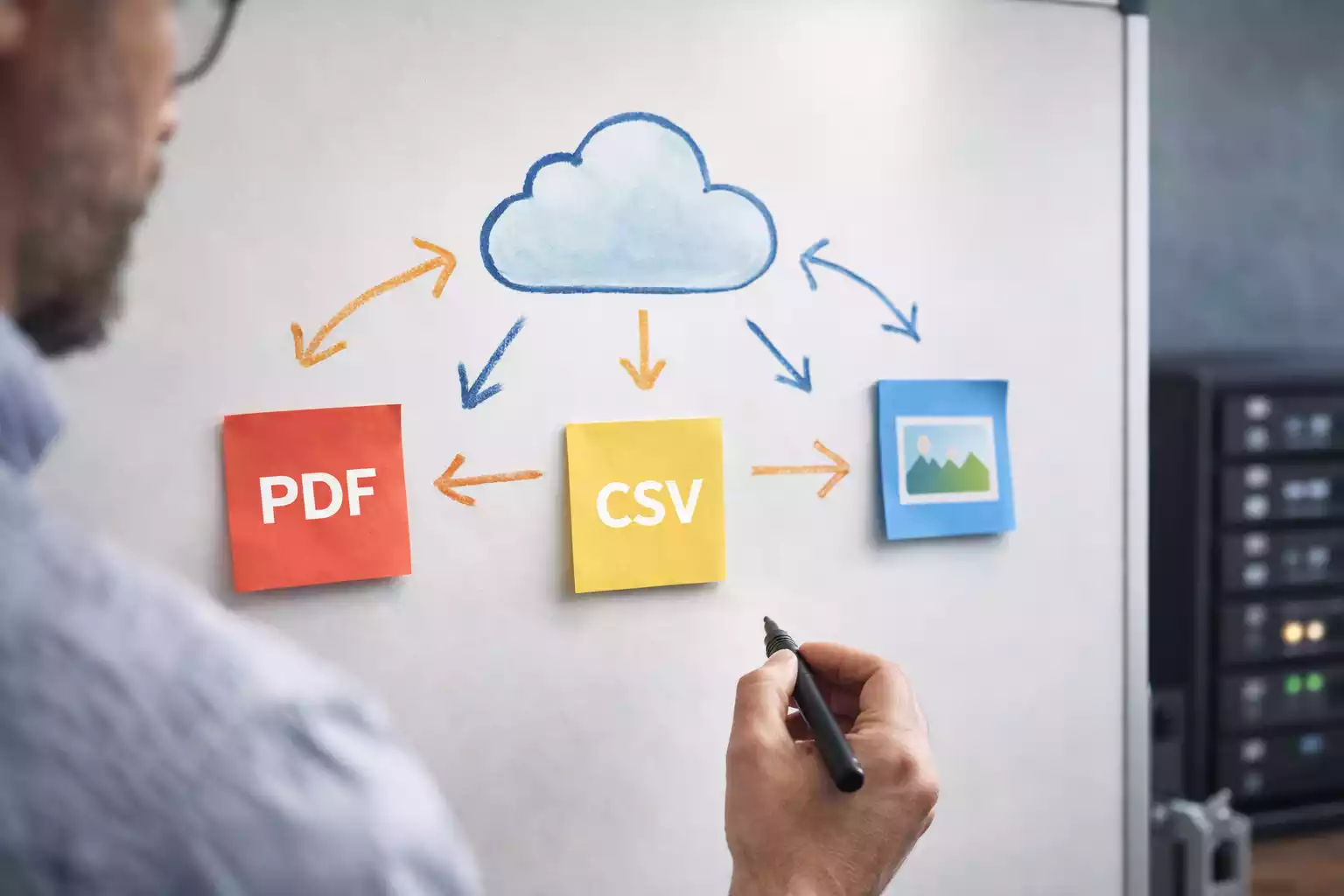
An open file format is one that is publicly documented, widely supported, and not controlled by a single vendor’s licensing terms. Examples include PDFs instead of proprietary document files, CSV instead of locked database exports, or plain-text formats like Markdown instead of custom editors that require an active subscription to open your own work.
Interoperability complements this idea. It refers to how easily one tool can exchange data with another without loss, distortion, or added fees. Together, open formats and interoperability determine whether your data belongs to you or is merely rented.
Why exit costs matter more than sticker price
Subscription pricing obscures the true cost of software. The monthly number looks manageable, but the real expense appears when you try to leave.
High exit costs show up as:
- Files that cannot be opened without an active license
- Exports that strip metadata, formatting, or history
- Migration tools locked behind higher-tier plans
- APIs that are limited, throttled, or paywalled
When your data is trapped, you are no longer a customer. You are a captive. Open formats lower switching friction, which quietly restores balance in the relationship.
Interoperability is leverage, not convenience
Interoperability is often sold as a productivity feature. In practice, it is a governance and risk-management issue.
Tools that integrate cleanly allow you to:
- Swap components without rebuilding your entire workflow
- Run parallel systems during transitions
- Audit, archive, or back up data independently
- Respond faster when vendors change terms, pricing, or direction
Even if you never leave your current platform, the ability to leave disciplines vendors in a way customer loyalty never does.
Common places organizations get locked in
Vendor lock-in rarely happens all at once. It accumulates quietly.
Typical pressure points include:
- Creative tools that store layered source files in proprietary formats
- Project management platforms with poor export fidelity
- Note-taking apps that require their software to read your notes
- Analytics tools that limit raw data access
- HR and payroll systems that restrict historical records
Each decision may seem minor. Over time, they form a cage.
How to evaluate tools before committing
You do not need to avoid proprietary software entirely. You do need to ask better questions.
Before adopting a tool, assess:
- Export quality: Can you retrieve complete, usable data without upgrading plans?
- Format longevity: Will the files still open ten years from now?
- Ecosystem support: Do multiple tools read and write the same formats?
- Documentation: Is the format publicly specified or reverse-engineered?
- Separation of concerns: Can the data exist independently of the application?
If a sales demo cannot answer these clearly, assume the worst.
Open formats as institutional memory
Organizations change vendors, leadership, and strategies. Data outlives all of them.
When information is stored in open formats:
- New teams can access historical records without legacy software
- Mergers and audits become simpler
- Long-term archives remain readable
- Knowledge does not vanish when contracts end
This is not about nostalgia. It is about continuity.
The quiet advantage of boring choices
Open standards are rarely the most exciting option. They are slower to market, less glossy, and harder to monopolize. That is precisely why they endure.
Choosing interoperable tools is an admission that no vendor deserves blind trust and no contract lasts forever. It is a conservative decision in the best sense of the word.
Practical examples by format type
| Use Case | Open Format Example | Proprietary Alternative | Risk if Locked In |
|---|---|---|---|
| Documents | PDF, Markdown | Vendor-specific doc files | Old work unreadable without renewal |
| Spreadsheets | CSV | Platform-specific sheets | Data loss during migration |
| Notes | Plain text | App-only note formats | Notes trapped in closed apps |
| Graphics | SVG | Native design files | Edits impossible without licensed tools |
| Project data | JSON | Platform-bound exports | Historical records degraded |
| Archives | ZIP | Custom backup containers | Backups unusable outside vendor |
Final thought
You may never cancel that subscription. You may stay happily for years. Favoring open formats does not force an exit. It simply keeps the door unlocked.
That freedom has value long before you ever use it.
One thought on “Favor Open Formats and Interoperability”